
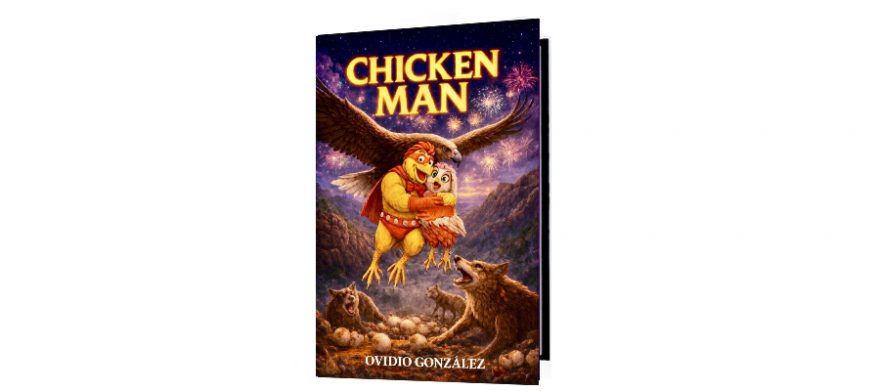
Not all stories that are born from hardship are destined to end in darkness. Some, even when they pass through improbable, confusing, or seemingly absurd scenarios, exist to remind us that human beings possess a deep—and sometimes forgotten—capacity to adapt, endure, and rebuild themselves.
The Chicken Man, written by Ovidio González, is one of those stories. This book rests on a singular premise that captures attention from the very first moment, but its true value does not lie in the extraordinariness of its events; rather, it lies in the perspective from which they are told.
Here, the ordinary and the unexpected intersect to shape a narrative that, unhurriedly, invites the reader to accompany a process of transformation understood not as punishment, but as learning.
The narration moves forward with simplicity and warmth. It does not seek to impress with artifices or impose interpretations.
It allows each scene to unfold naturally, leaving room for empathy, reflection, and above all, hope.
Throughout these pages, the reader will discover that even in the most complex circumstances, genuine bonds, courageous decisions, and unexpected opportunities can emerge.
This book is not read from mockery or judgment. It is read from a place of humanity. From the possibility that, when circumstances place us in uncomfortable or unjust positions, there is always a way forward—not by fleeing, but by growing. The tone of the work, at times light and at times introspective, accompanies this idea without forcing it, allowing
the message to emerge on its own.
The Chicken Man does not promise absolute answers, but it does offer something valuable: a story that trusts in people’s ability to find meaning even when the path becomes unexpected. It is an invitation to read with openness, to allow oneself to be surprised, and to remember that every transformation, no matter how strange it may seem, can lead to a better place.
